


History of the
Catholic Student Center
The Washington University Newman Community
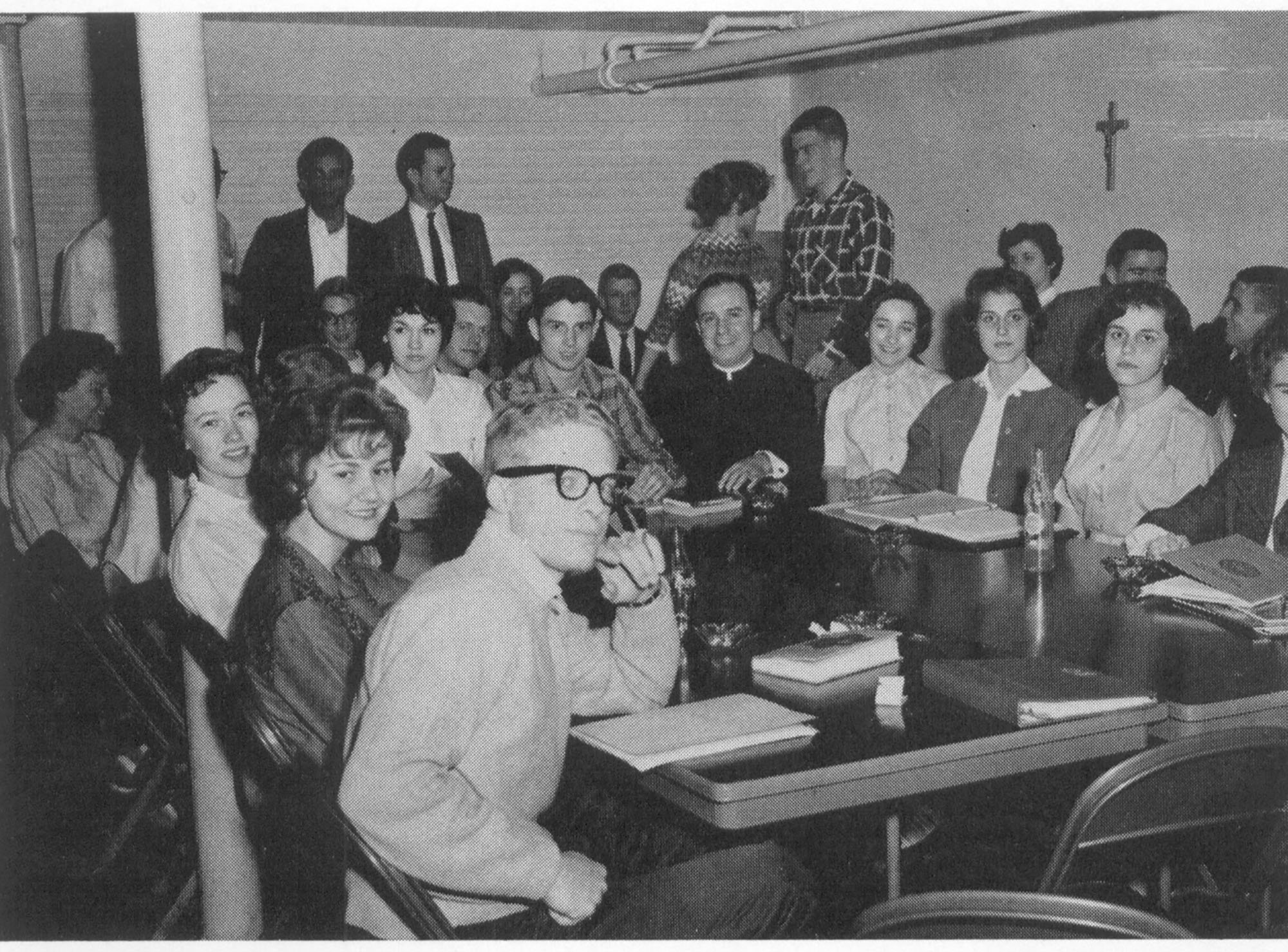
The Catholic Student Center at Washington University began as a study club of Catholic students in 1927. The group was officially approved as a Newman Club in 1948 and initially met in the basement of Our Lady of Lourdes Catholic Church, just down the street from today’s CSC location on Forsyth Blvd.
In 1950, Monsignor Gerard N. Glynn was appointed to head the Newman group. The original center consisted of religious, educational, cultural, and social activities for nearly 1,000 Catholic Washington University students.
With the help of generous sponsors, Msgr. Glynn purchased the current residence of the Catholic Student Center in 1956. Just four years later, the Newman community grew to serve 2,500 students from Washington University, Harris Teachers College, Central Institute for the Deaf, St. Louis College of Pharmacy, Lindenwood College, Barnes and Jewish Hospital medical center and nursing schools, and the Missouri Extension Community College in Normandy.
Monsignor Glynn retired in 1989 and was briefly replaced until Father Gary Braun was appointed Chaplain/Director in 1991.
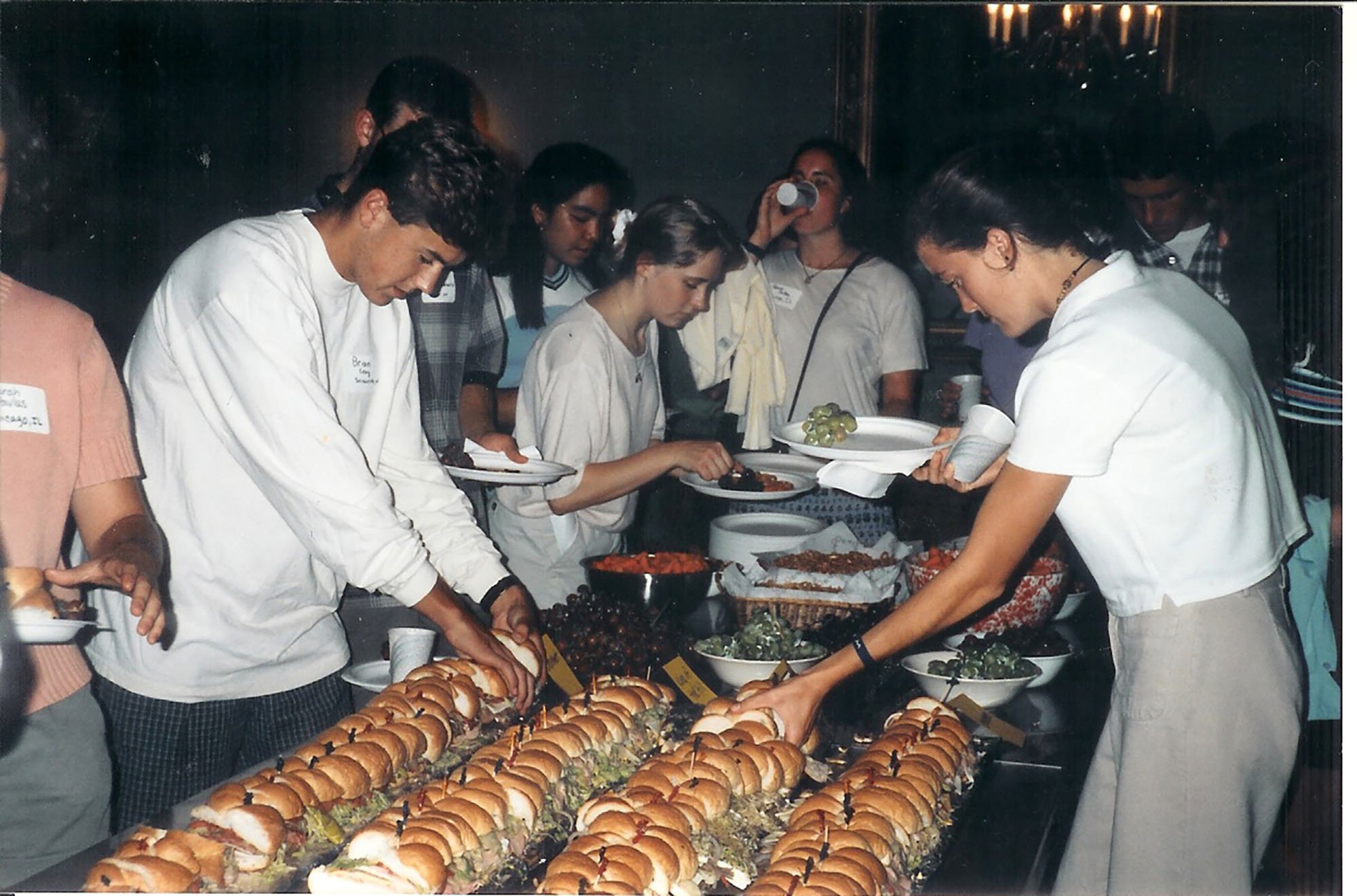
Fr. Gary made a significant impact not only to the appearance of the center but also to the way it was utilized. His homilies drew many non-students and many non-Catholics from across the St. Louis area to the Catholic Student Center. These friends of the CSC became a tremendous base of support for its mission.
Following a storied 32 years of service to the Catholic Student Center/Newman Community at Washington University, Fr. Gary retired from his leadership role and was succeeded by Fr. Brian Fallon in 2023.



The CSC Building
The building we know today as the Catholic Student Center was once a residential property originally built in 1925. The house was designed by Maritz & Young Architects with many design features that remained popular in St. Louis after the 1904 World’s Fair. The home’s owner was George Taylor who married a young woman named Ida Howe. Ida’s brother James Howe, a pharmacist, is credited for developing the antacid, TUMS, to treat his wife’s indigestion.
One of James Howe’s grandsons recalled memories of visiting the house where a special treasure to him was a suit of armor in the front hall. A family friend nostalgically remembers “... at Christmas the house was filled with music from the grand piano in the stairway hall. The acoustics were incredible.”
The Taylor Family ownership of the property ended when it was purchased by Elmer J. and Susan Steger from whom it was later acquired to be used as the Newman Center for students at Washington University.
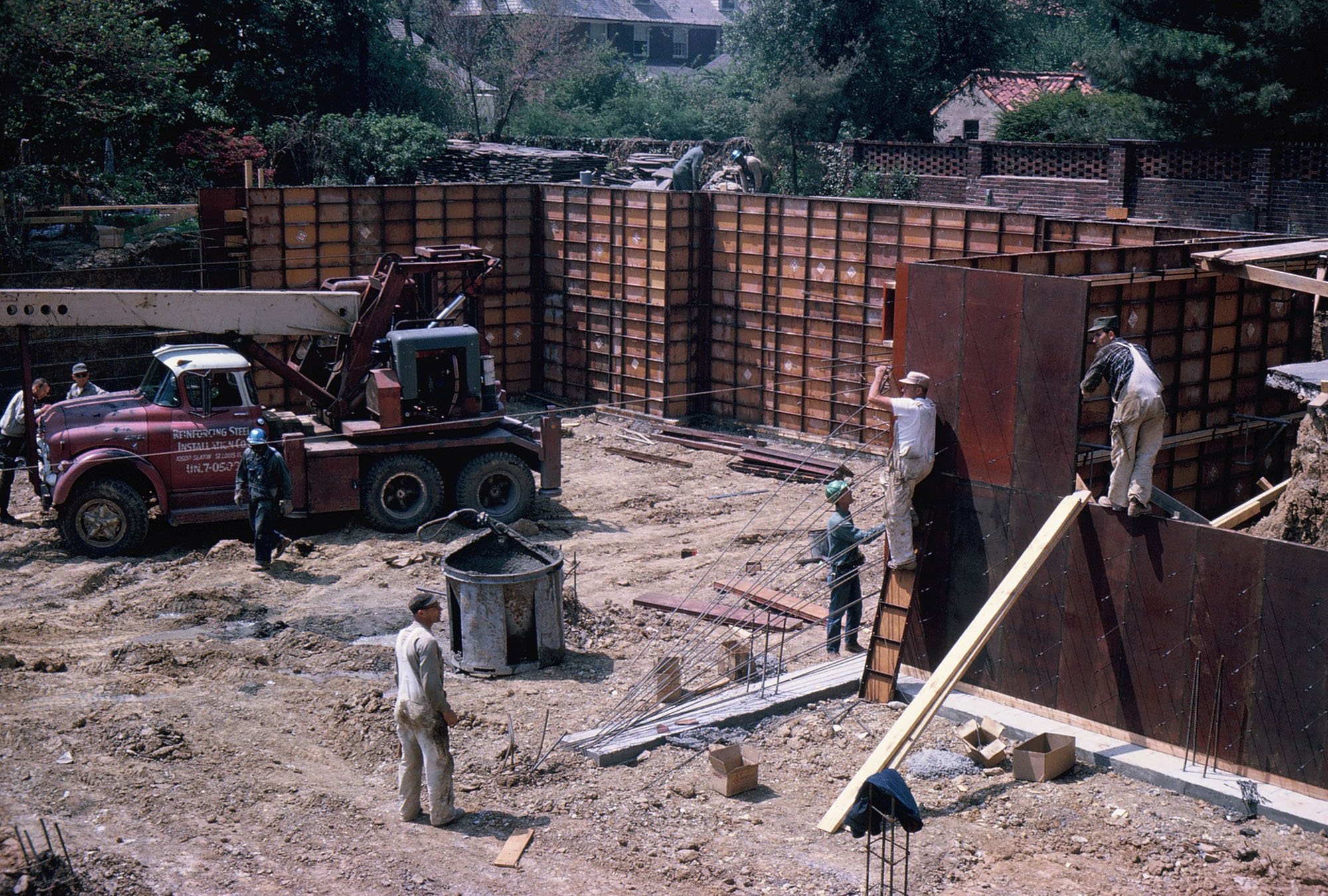
In 1964, a new wing adjoining the southwest corner of the original building was completed. This wing extended over the spacious gardens, some of which still remain on the south side of the present chapel. The addition consisted of offices, meeting spaces, and our chapel, dedicated to the Sacred Heart. Two additional renovations of the facility were undertaken in 2007 and 2021.




The Chapel Mural and Artist Edward Boccia
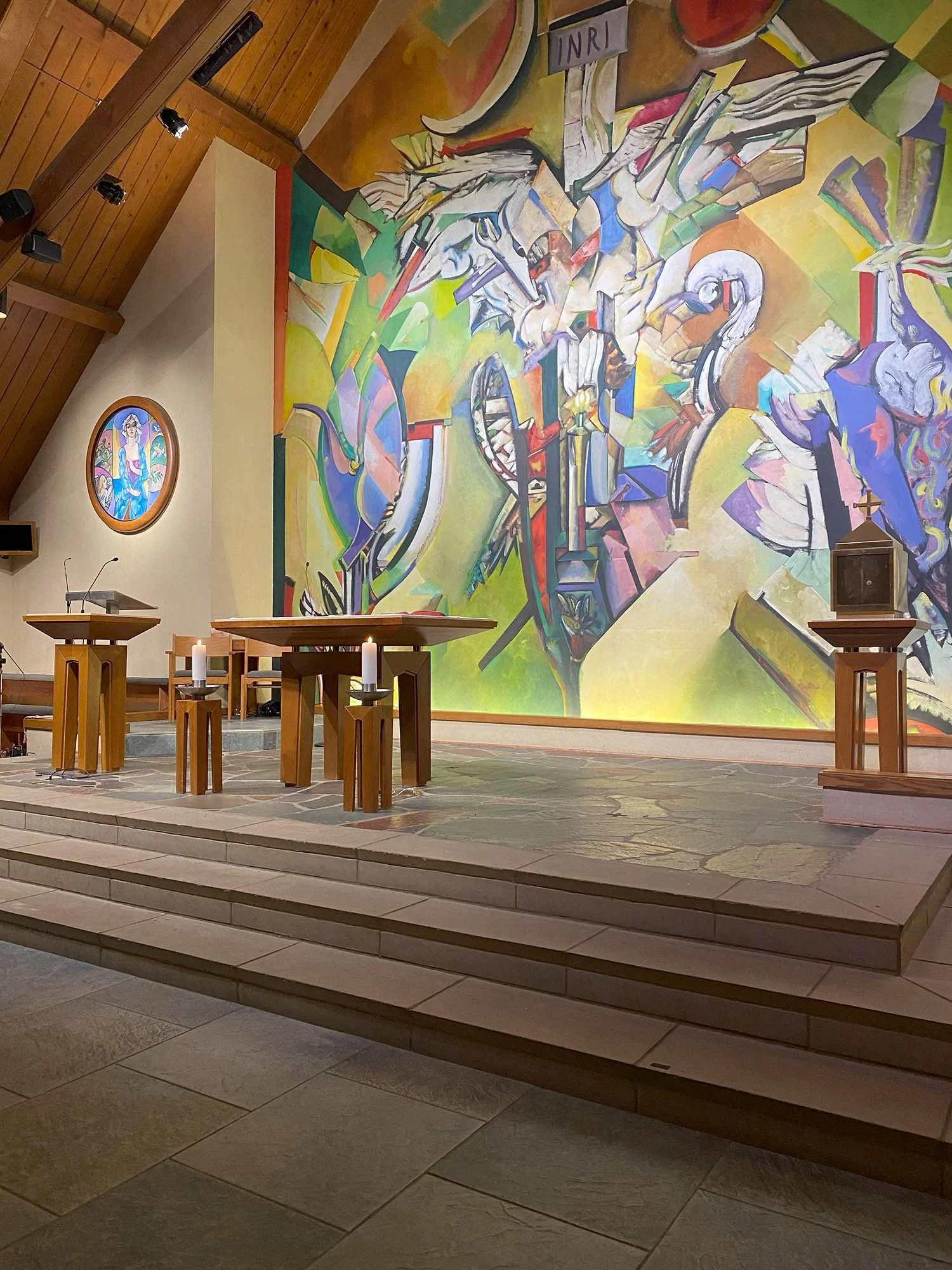
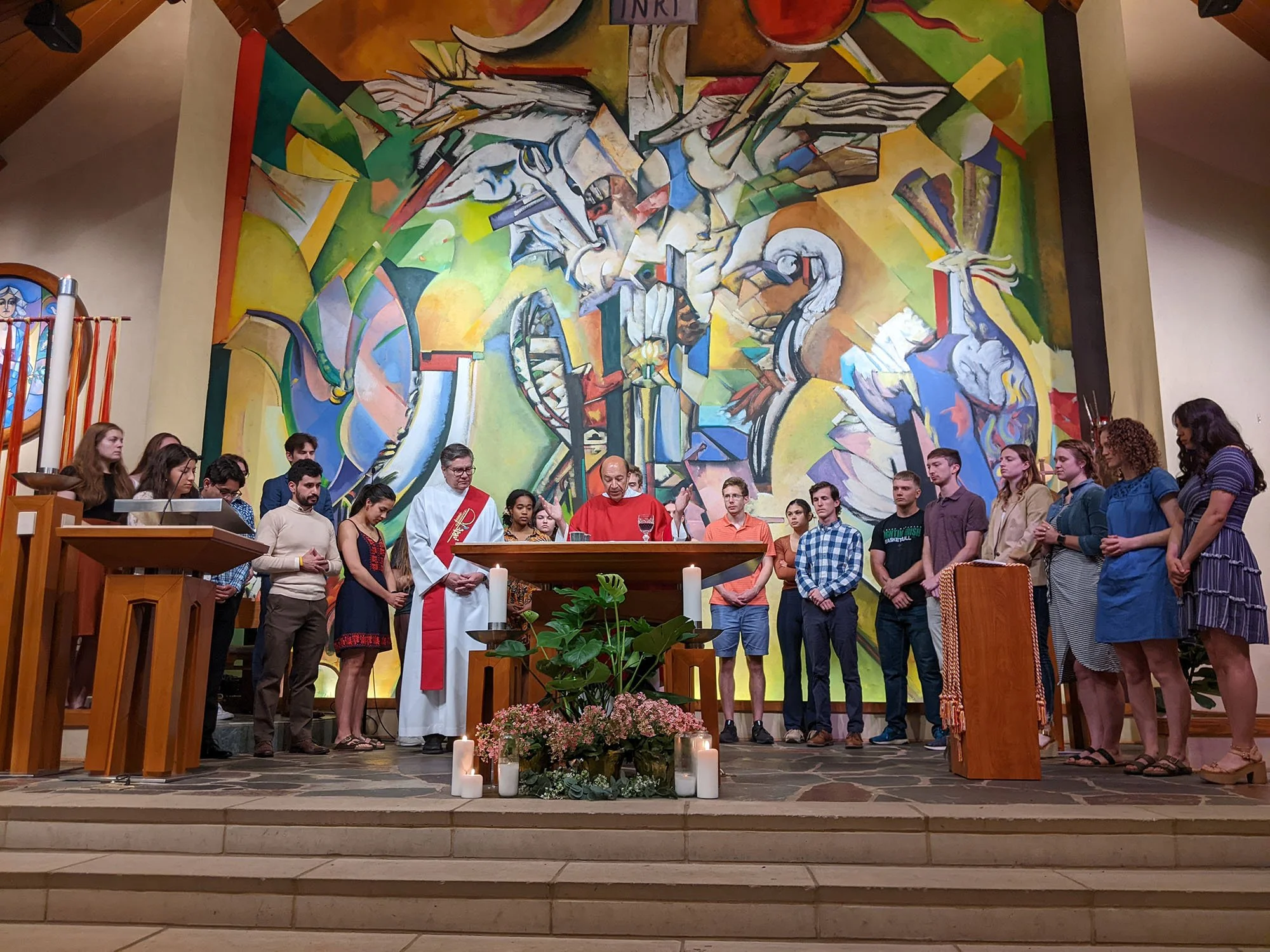
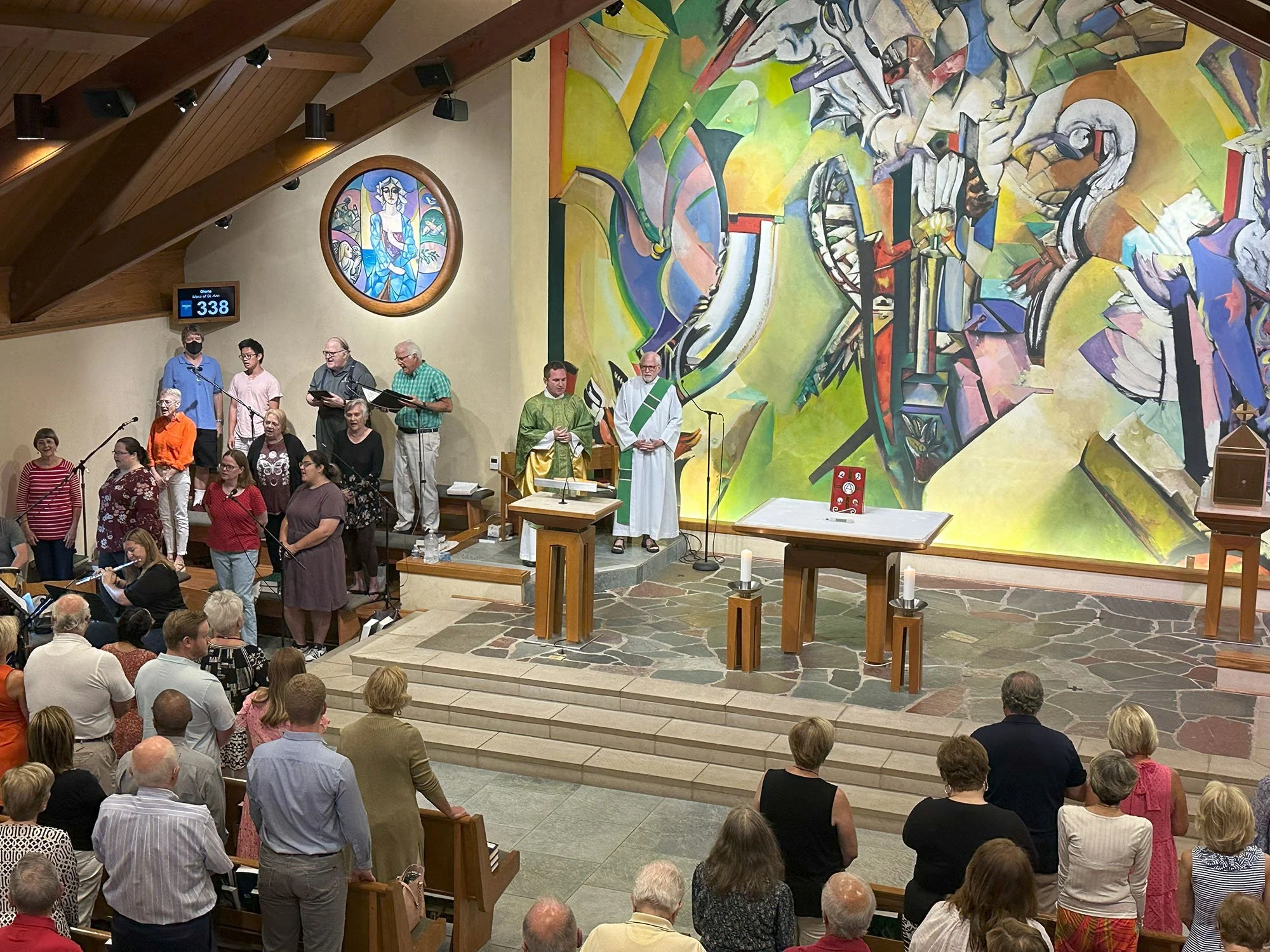
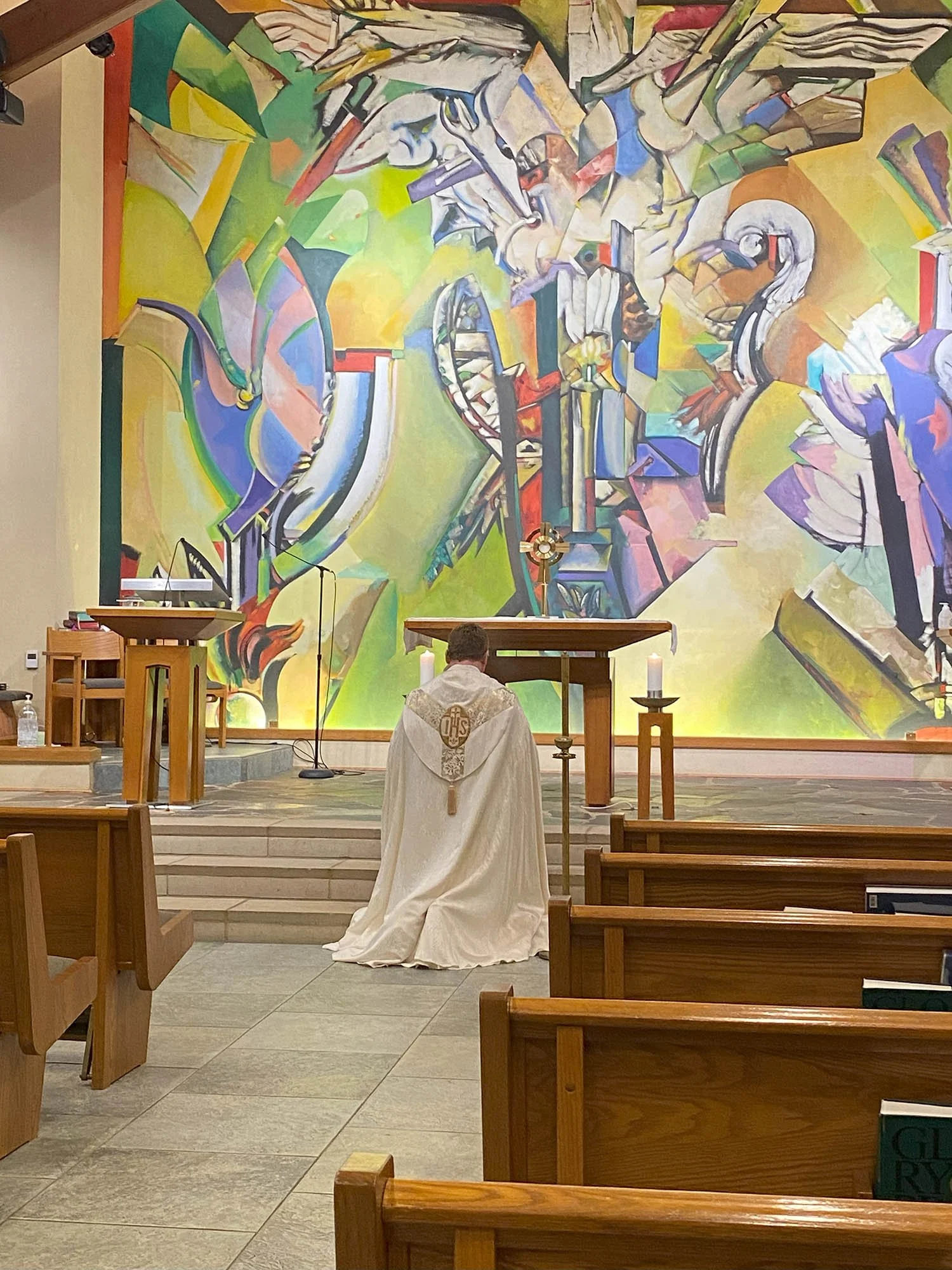
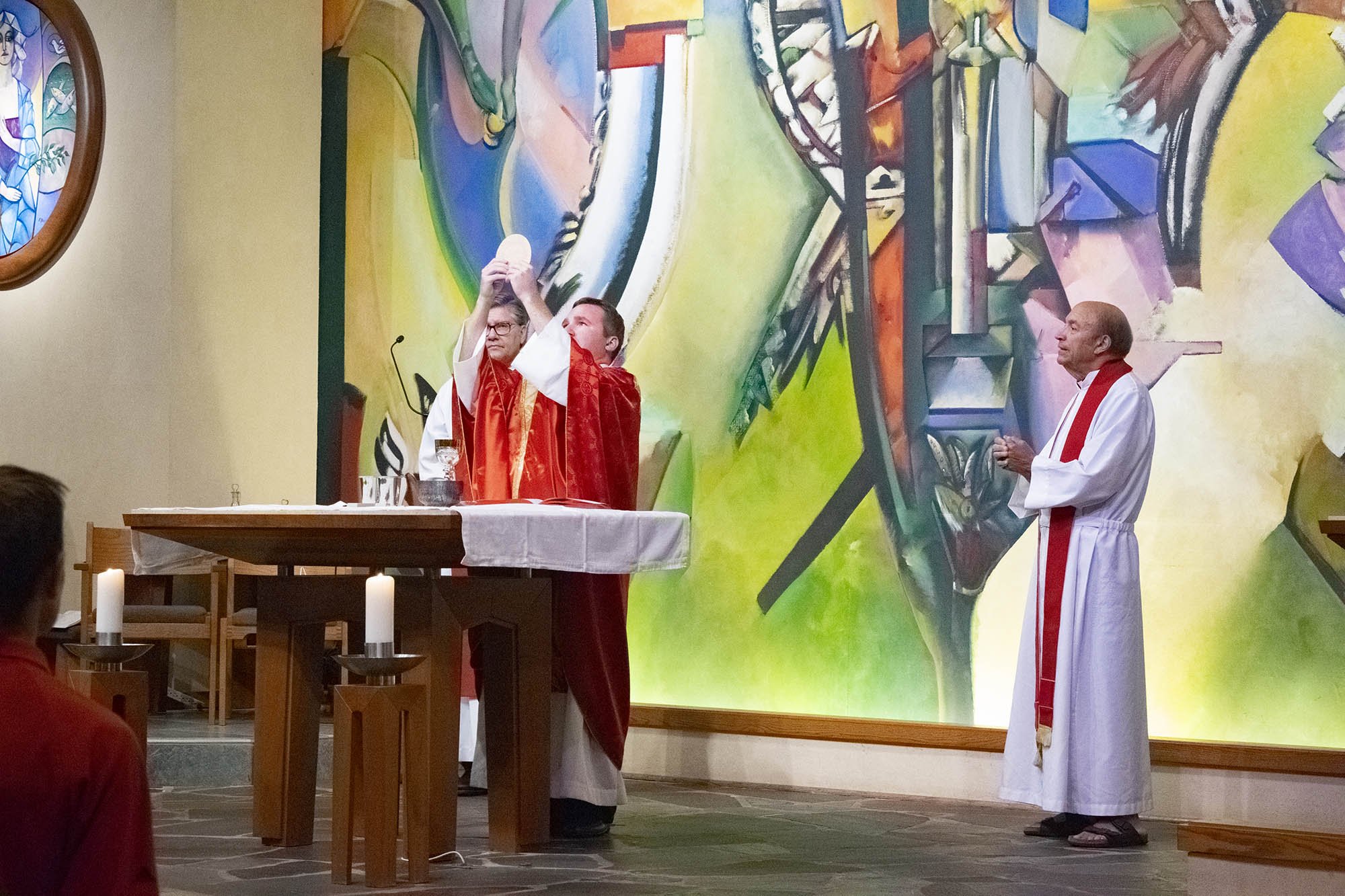
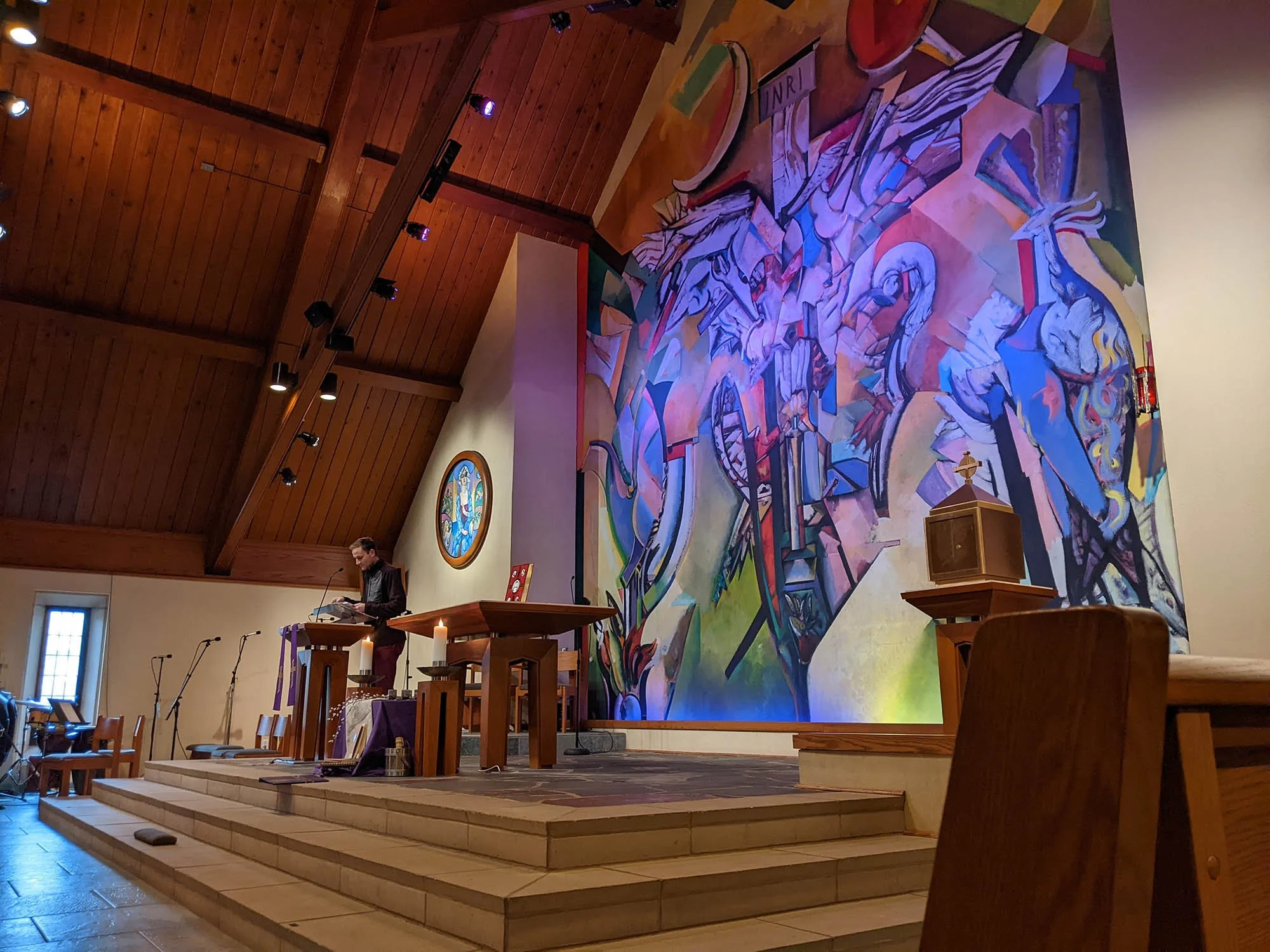
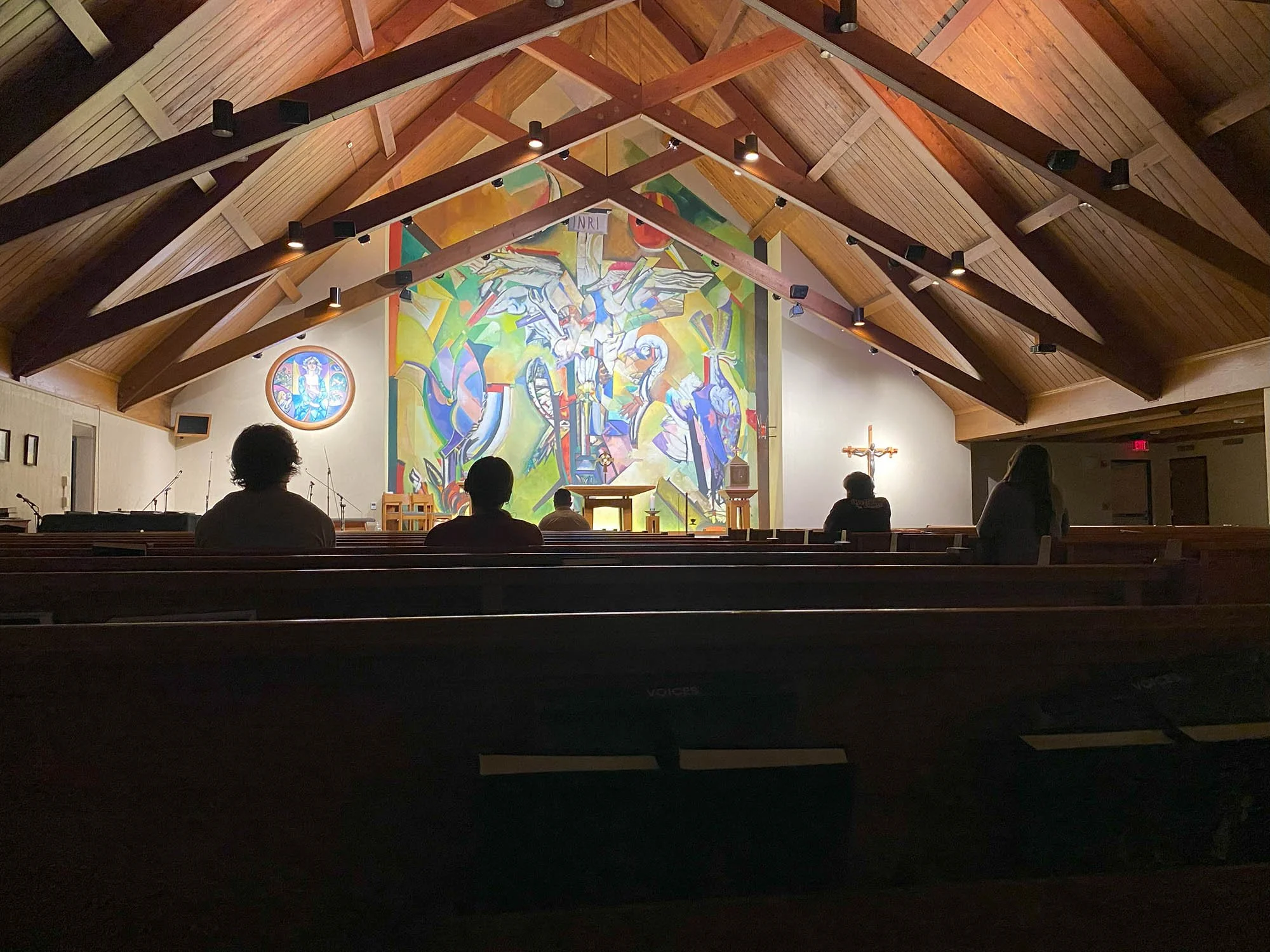
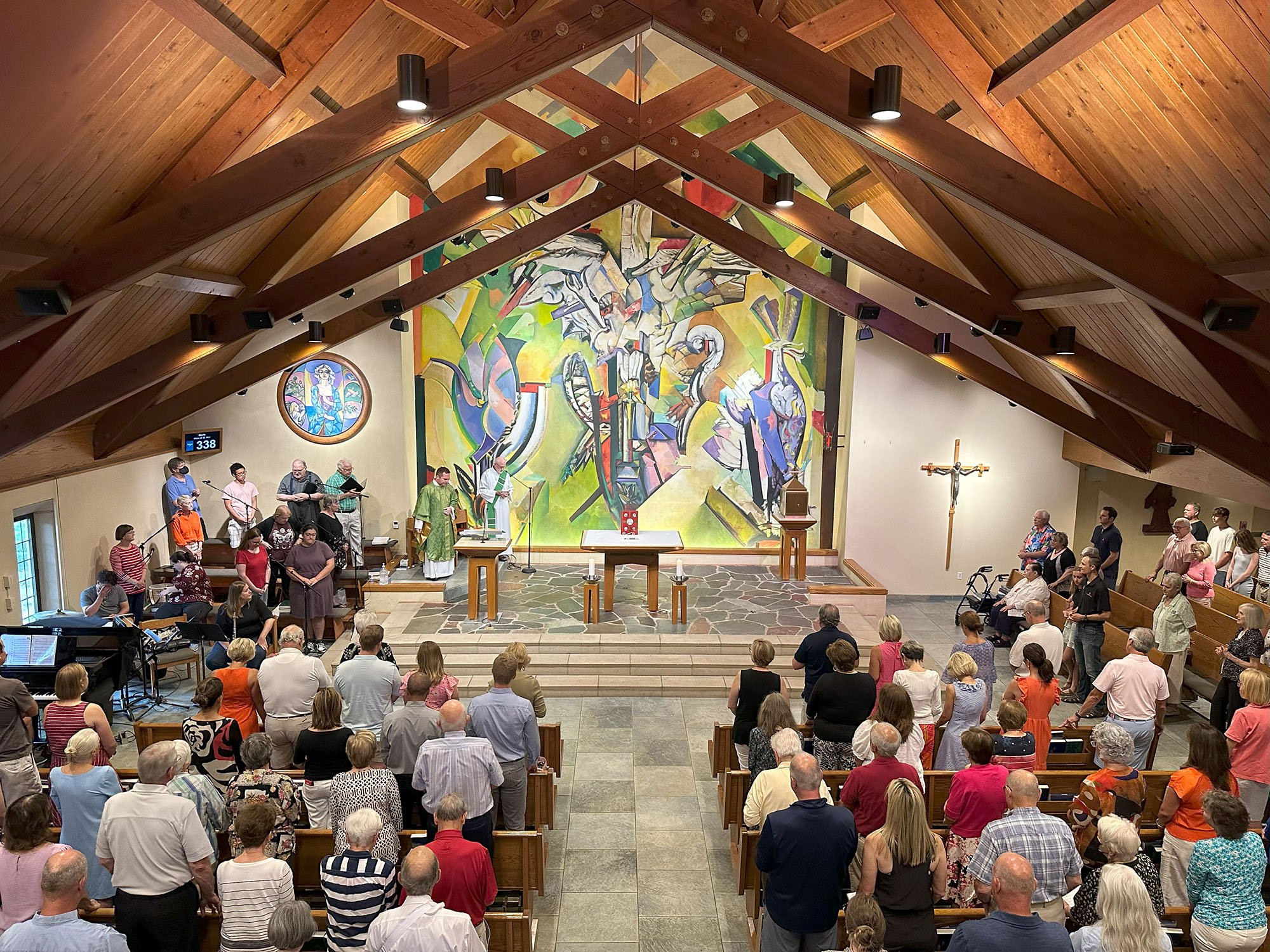
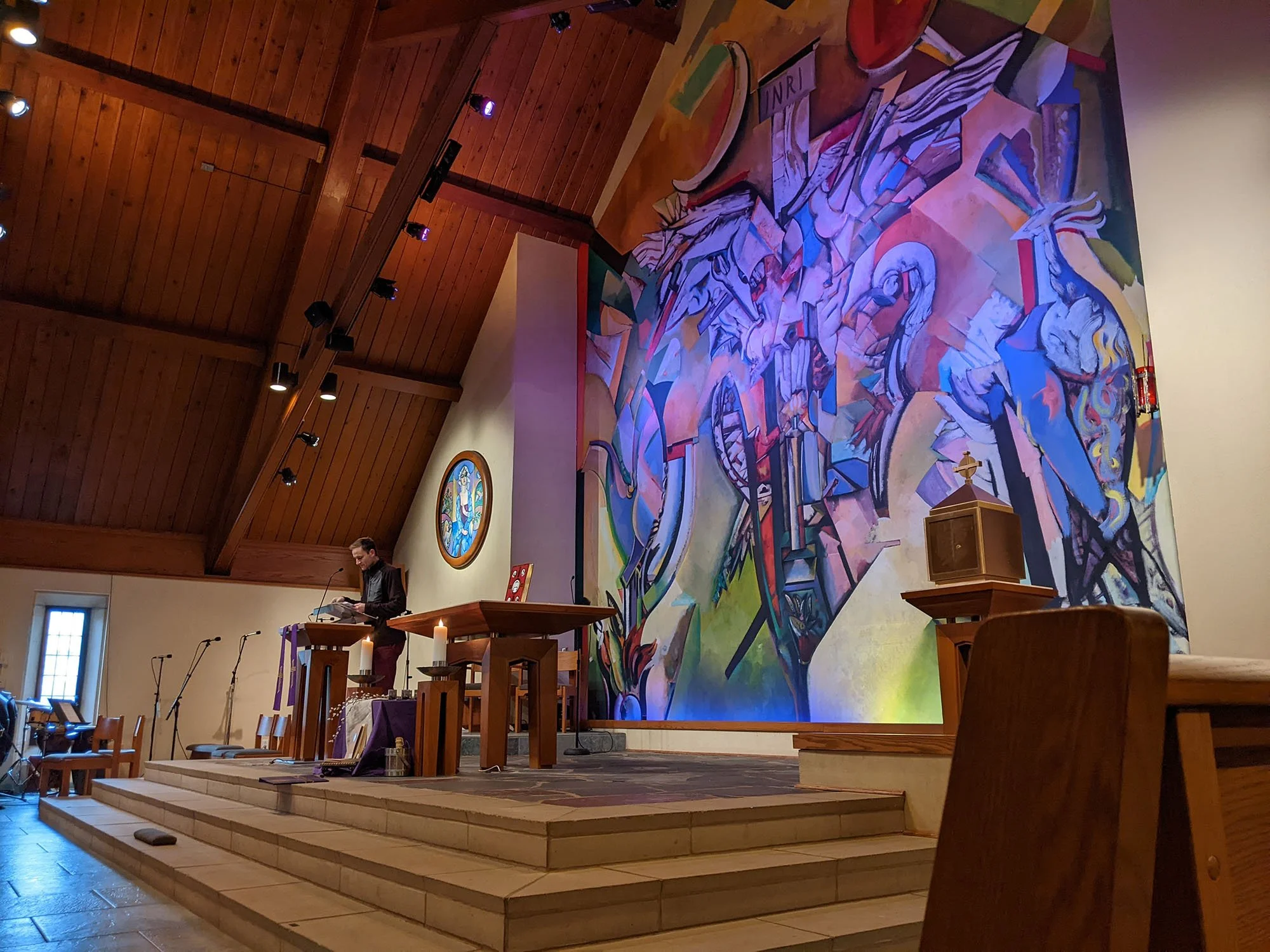
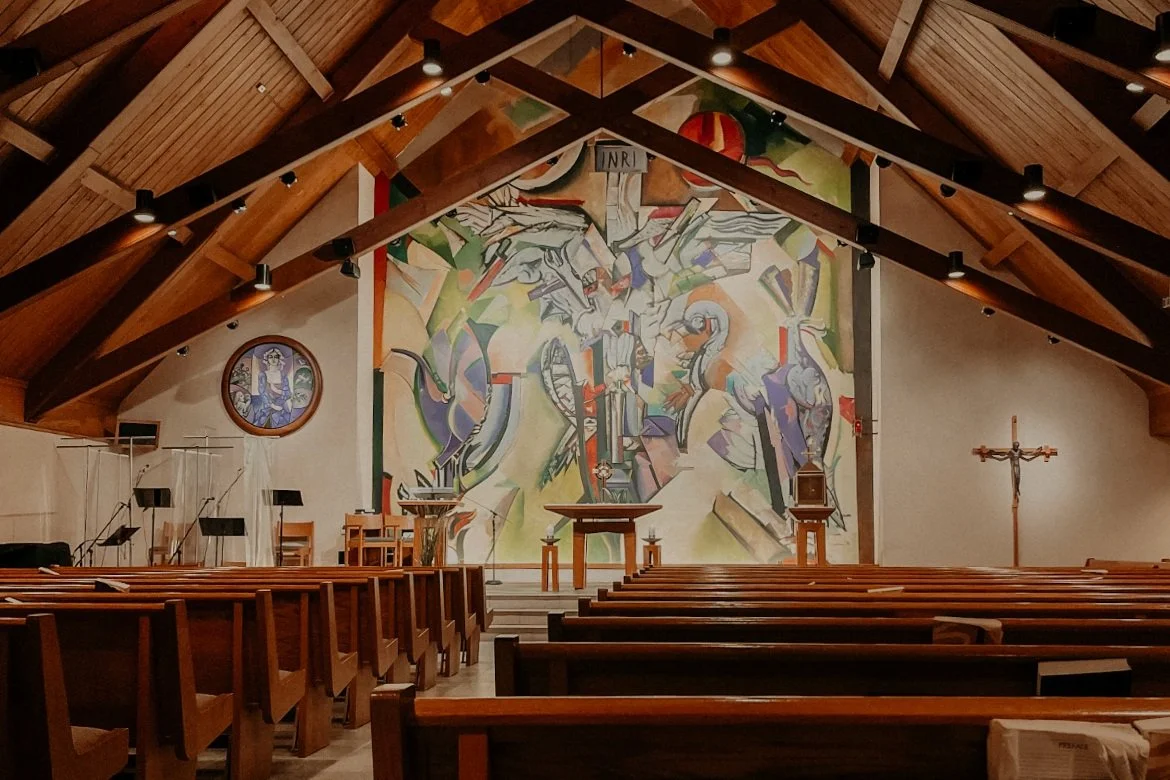
The mural on the front wall of our chapel was commissioned by Monsignor Glynn and painted by the artist Edward Boccia (1921-2012).
The stained glass windows and stations of the cross in the chapel were also created by Boccia, who was known for his large-scale, multi-panel oil paintings in the neo-expressionist style.
During WWII, Boccia was a member of the infamous “Ghost Army” whose artistic ingenuity allowed them to deceive Hitler’s forces as to the size and scale of the Allied army’s ground power. The unit used theatrical effects including inflatable tanks, fake aircraft and sound equipment to mislead the enemy. The story of the Ghost Army was kept a secret for more than 50 years after the war until it was declassified in 1996.
In 1951, Boccia joined Washington University as the Assistant Dean of Fine Arts where he taught and painted for over 30 years. Much of his work reflected an interest in religion and its role in the modern world, and we are blessed to have his art as a thought-provoking feature of our chapel.
In 2025, The Missouri Historical Society interviewed former CSC chaplain, Fr. Gary Braun, to gain his perspective of the mural: “Msgr. Glynn and Boccia worked closely together on the mural, the push and pull of their ideas giving rise to a truly unique and beautiful piece of art. Boccia’s mural has worked on me, like any good art does. Every time I look at it, I see something new.”
Symbolism of the Mural
“Boccia was a deeply Catholic artist,” Fr. Gary Braun said in the interview. “He believed in the power of symbols, believed they could go further than words in transforming people.” The CSC mural is therefore full of symbols of Catholic faith and ancient myth:
The Jain Cross divides the mural, and at the very center of the cross is a black dot. The dot symbolizes the nothingness from which everything came to be.
The moon on the left side of the mural is a symbol of Mary, who reflects the light of her son, Jesus.
The ovum (the egg) is located at the left bottom, with flames emerging from it. To Boccia, the flames symbolized divine presence, the beginning of everything and also the continuing, ongoing conception of life.
The ovum stretches out into the world through a budding flower, symbolic of birthing, flowering, greening. The green on this side symbolizes growth, which continues into the angel wings, which are also the wings of the cross.
At the top of the cross is the INRI symbol, Iesus Nazarenus Rex Iudaeorum, “Jesus of Nazareth, King of the Jews.”
The butterfly is a symbol of resurrection. The caterpillar is a whole different creature from the butterfly, yet still the same. Both symbolize transformation.
The open doors of the tomb where Jesus was laid are on the right side, giving birth to eternal life.
Another sun is shown at the bottom, not the same sun as above, but more like a rising sun. The tomb is broken open; life emerges from it.
A pelican, an ancient Christian symbol, is also on the right, based on the myth that a mother pelican pierces her breast, sacrificing herself so they can live.
The mural as a whole is about the mystery of redemption, the dying and rising of Christ, and the mystery of creation. With the mural as a backdrop for Mass, Boccia once said: “The point is that the priest and the altar at Mass are meant to be caught up in these two great mysteries of creation and redemption.”
The mural has been a source of deep reflection and even some controversy throughout its 60+ years as a focal point for CSC Masses. Fr. Braun said, “Whatever you're feeling, you'll see it reflected up there. It has become a symbol for the Student Center, a place where students meet their own creativity, their questions, and their transformation.”
Phases of the Mural
During the painting of the mural, the altar and tabernacle were positioned against the back wall. Shortly after the completion and dedication of the mural, a change during the Second Vatican Council in 1965 directed that the altar be pulled out from the wall. For 30 years, the bottom of the mural was blank.
When the chapel was renovated in the early 2000s, Boccia offered to complete this bottom section as part of the project. He painted the base of the Easter candle and a flowering plant in a three-dimensional style, a change from the original two-dimensional style of the top section. The plant emerged from a pool of red, adding to the symbolism of redemption prominent throughout the mural.
“I watched him work,” Fr. Braun said. “It was powerful to see an artist of his magnitude bring this to completion, almost in a whole new way, because of history, circumstances, and our deepened understanding of the Mass. The changes meant something. The Mass wasn’t just a sacrifice anymore, it was community, transformation, Eucharist.”


![CSC chapel Picture large[6324].jpg](https://images.squarespace-cdn.com/content/v1/60fee1d83162bc40e6be752f/08a4ff00-9b70-4e1a-92b8-8af386963d4c/CSC+chapel+Picture+large%5B6324%5D.jpg)